

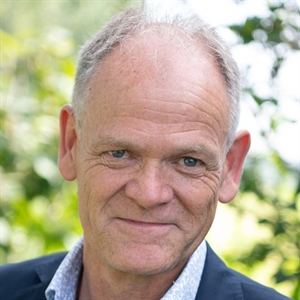
| “Climate adaptation touches on many other challenges: energy, mobility, housing, nature, safety and resilience. All these topics affect people. Then it is extremely important to pay attention to the undercurrent: what is worrying people, what hurts? In terms of content and process, the risk dialogue guide provides a lot of guidance, but we felt that something was missing. That you connect on aspects other than what you technically need in such a spatial planning process. The human side is crucial for a fruitful outcome of the risk dialogues. The narrative and people-oriented approach of Learning Stage and GovernEUR offers concrete and useful tools.”
Pieter den Besten, programme manager Delta Programme Spatial Adaptation |
Background Delta Programme Spatial Adaptation
The Netherlands climate-proof and water-robust: that is the goal of the Delta Programme on Spatial Adaptation, which is made up of the work of 45 working regions. Municipalities, water boards, provinces and other organizations work together to limit flooding, drought, heat stress and the consequences of flooding due to the changing climate.
The Delta Spatial Adaptation Program supports the working regions in this cooperation process. The risk dialogues are an important part of that process: the step between the stress test (how vulnerable is the area to extreme precipitation, heat, drought and flooding?) and drawing up an implementation agenda. In the risk dialogues, the participants determine together which risks they find acceptable or not. They make well-considered choices for implementing the ambitions.
The question to Learning Stage and GovernEUR
To support the risk dialogues, the Delta Spatial Adaptation Program has drawn up a guideline for preparing, conducting and safeguarding the dialogues. This guide is structured in terms of process and technical content and in that respect also meets a great need. But it did not yet answer some questions, for example: How do you make good decisions together in a multi-stakeholder field? How do you ensure a people-oriented approach to dialogues, where the outcomes actually help with the next steps? What do you do if you can’t convince your political representative?
To answer these types of questions, more attention to people in the dialogue is needed. That is why the DPRA team asked Learning Stage and GovernEUR for tips and advice for a people-oriented approach. To this end, we have used our knowledge of organizational science, collaboration between parties on complex issues and narrative-based learning and reflection methods. We also conducted interviews with experts and facilitators of narrative-based methods, such as narrative inquiry and deep democracy.
Our tips for a more people-oriented approach to the dialogues are included in the digital guide in the form of a Q&A list: https://klimaatadaptatienederland.nl/handreiking-dialogen/